

 |
Welcome to theOhio Council of the Alzheimer's AssociationThe Ohio Council of the Alzheimer's Association is comprised of seven Association Chapters that serve the State of Ohio for the purpose of presenting and advancing public policy initiatives related to Alzheimer's disease and other dementias at both the state and federal levels. Our mission is to provide a statewide advocacy voice to ensure that executive, legislative and judicial decisions meet the needs and represent the interests of Ohioans with Alzheimer's disease and related disorders, their families and caregivers. |
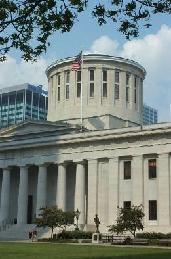
Take ActionBe Part of Our State Success at Memory Day 2018How can you be a more effective voice for your loved ones affected by Alzheimer's disease or a related dementia? How can you help ensure that your state legislators support vital Alzheimer's programs and services that assist families in your community? How can YOU make a difference? Join us Wednesday, May 9, 2018 for the 2018 Ohio Memory Day in the fight against Alzheimer's. Now in its 20th year, the Ohio Memory Day is one of the longest-running and successful Alzheimer's advocacy events in the nation. Memory Day, held at the Ohio Statehouse in Columbus, offers participants the unique opportunity to meet other Alzheimer's advocates from across the state as well as share their personal stories and concerns related to Alzheimer's disease with their elected representatives and their staffers. In addition to the office visits, a luncheon program featuring prominent guest speakers will be held in the Statehouse Atrium. An estimated 210,000 Ohioans are affected by Alzheimer's disease. Another 597,000 Ohioans serve as their caregivers. By participating in Memory Day, you will lend momentum to our shared vision of a world withouth Alzheimer's. To register for Memory Day, please call (800) 272-3900 or contact your local chapter for details. 2017 Public Policy PrioritiesState Priorities
Event UpdatesRecord Attendance for the 2017 Annual Advocacy ForumA record-breaking number of Alzheimer’s advocates representing all 50 states and Puerto Rico gathered in Washington, D.C. for the annual Alzheimer's Association Advocacy Forum March 27-29. More than 1,300 Alzheimer's supporters, including 50 advocates from Ohio, met with members of Congress to ensure Alzheimer's remains a priority. To prepare for meetings with legislators, advocates attended training sessions to learn about the latest tactics on how to advance the Association's federal priorities with Congress both in Washington, D.C. and back home. Throughout the Forum advocates heard from members of Congress as well as Richard Lui (MSNBC anchor) and Mike McCurry (former press secretary for the Clinton White House). Maria Shriver, journalist and advocate, received the Association’s Lifetime Achievement Award during the National Alzheimer’s Dinner. Actor and Alzheimer’s supporter Peter Gallagher served as the dinner’s emcee. Forum activities concluded March 29 with countless meetings between advocates and legislators. Ohio advocates had the opportunity to meet with Senator Rob Portman and staff from Senator Sherrod Brown’s office, along with Congressional members and staff from across the state. In addition to requesting a $414 million increase for Alzheimer’s research at NIH, the Association asked for support of the Palliative Care and Hospice Education Training Act (PCHETA). PCHETA (S. 693/H.R. 1676) would increase palliative care and hospice training for health care professionals, launch a national campaign to inform patients and families about the benefits of palliative care, and enhance research on improving the delivery of palliative care. Alzheimer's is the most expensive disease in America costing the country $259 billion this year. The advocates who attended the Forum were taking steps to change the trajectory of this costly disease by sharing their stories and the impact of the disease. For more on the Forum, visit www.alz.org/forum. |
|
Now is the time to be a voice for those suffering with Alzheimer's disease and related dementias. If Alzheimer's disease continues on its current path, it is estimated that up to 16 million Americans will have this disease by 2050. Being an advocate will keep you informed of current and upcoming legislation that is designed to help increase the awareness of Alzheimer's disease, make Alzheimer's a priority for research funding and help families through support and other resources as they journey through this devastating disease. Once you have registered as an advocate, you will receive periodic e-mails with updated information and action alerts. The action alerts will request you send an e-mail or letter to your legislator to ask for their support. It is important to supply your address information which allows us to connect you directly with your legislator. Please register To become an advocate.
|
| For more information on your local chapter, please select and visit their individual site. Unsure which chapter is local to you? Click here for a map. |
||
| Central Ohio Chapter Columbus, OH |
Cleveland Area Chapter Beachwood, OH |
Greater Cincinnati Chapter Cincinnati, OH |
| Greater East Ohio Chapter Hudson, OH |
Miami Valley Chapter Dayton, OH |
Northwest Ohio Chapter Toledo, OH |
| West Virginia Chapter Charleston, WV |
||